
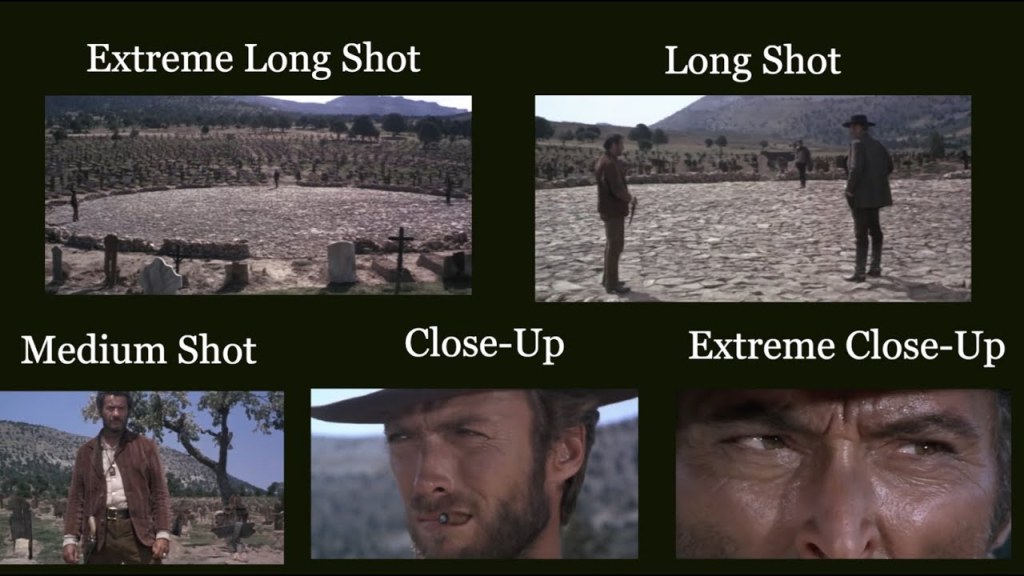
WHAT IS IT?
The variance of camera angles in filmmaking are used to help enhance the narrative, the theme, and the overall mood of the film. Cinematographers usually make a conscious choice as to how each scene is shot. By doing so, they strive to convey the overall message of their film through each individual frame making how the camera is angled in each scene, of utmost importance. In filmmaking there are various types of camera angles that can assist you in pushing forth your intended narrative goal for your film, everything from basic to advanced camera shots.
LEARN ALL ABOUT SHOT TYPES BELOW:
LEARNING RESOURCE HERE:
If you need a visual – below is a PDF that you can download to understand the subject matter more.
STEP 01: GOOGLE SLIDES
Create a Google Slides
CHALLENGE:
Students will learn shot types in cinematography. They will produce a google slides show demonstrating these skills.
STUDENT EXAMPLE
DELIVERABLES:
Contents of the Slides should have 8 slides in total:
Slide 1: Title page (Name, Date, Assignment Name)
Slide 2: An example of an “Extreme Wide Shot” along with a description.
Slide 3: An example of an “Wide Shot” along with a description.
Slide 4: An example of an “Medium Shot” along with a description.
Slide 5: An example of an “Medium Close up Shot” along with a description.
Slide 6: An example of an “Close up Shot” along with a description.
Slide 7: An example of an “Extreme Close up Shot” along with a description.
Slide 8: Ending Page (Thank you to the people involved. State the equipment you used.)You must finalize your story for the Cutting on Action. If you can’t figure out an idea, you must use the scenario below:
PARAMETERS/ LIMITATIONS:
- Only one character THROUGHOUT the assignment
- Must create your own slides with your own shots.
- The idea must be limited to within school.
- Location should be accessible to be filmed at any point.
- Character must be consistent.
DON’TS & DO’S
- Clarity of shots. Is your subject in focus, what about the background? Does it have a bokeh?
- Is the background interesting or plain.
- Lighting: Is the subject lit well enough to view? Background is not duWhat about your description? Is your description of your slides thoroughly represented?
- Are there any grammatical errors?
STEP 02: Submit
To submit – turn in a link to your Google Slides. Be sure to only have 8 slides in your complete slide deck. No more and no Less.
 Remtech Studio